ClUE BIRTH CONTROL: ONBOARDING
ROLE Senior Product Designer, Design Lead
TIMELINE June-August 2022
DOMAIN Health tech, growth
SCOPE Native apps: iOS & Android
IMPACT Doubled clickthrough rate of onboarding funnel
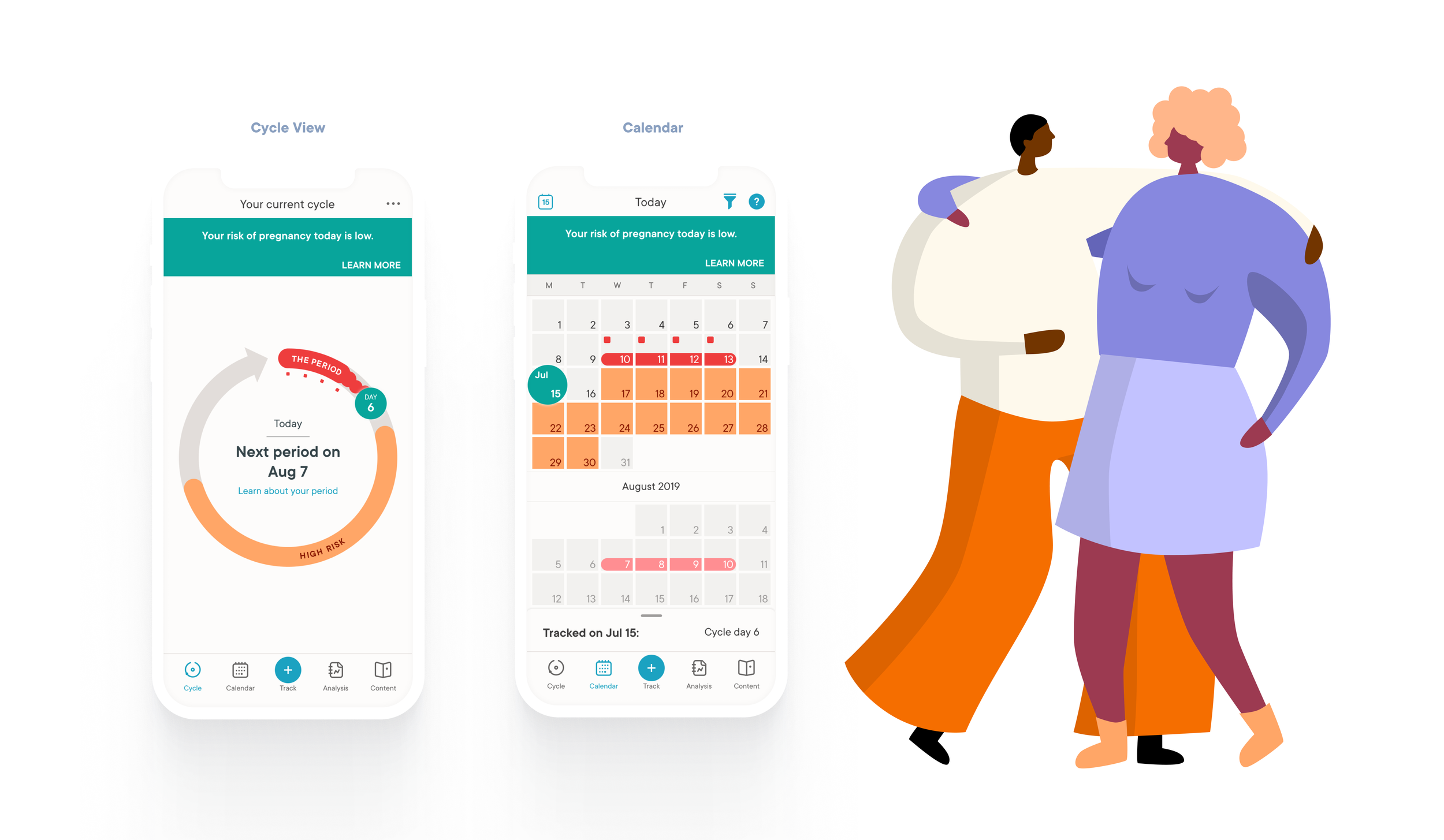
The main screens of Clue Birth Control.
Clue is a pioneer femtech app with 11 million users worldwide. Clue helps women and people with cycles take control of their reproductive health. During my tenure at Clue I worked on the premium products Clue Conceive and Clue Birth Control.
Background
Clue Birth Control is a mode inside the Clue app, that uses a clinically tested algorithm to predict the high risk days in the user’s menstrual cycle, using only the period start date as as an input. The app tells the user when they need to use condoms and when it is safe to have unprotected sex. The product had recently been launched in the USA to a limited group of users, after it had gained FDA clearance as a medical device. In my onboarding to the project I learned a lot about what it means to design and iterate on a product that is regulated heavily as a medical device.
Defining the problem & opportunity
Clue Birth Control had received a lot of attention and interest. At the time we had a few hundred users in the mode, and had opened the funnel to a small percentage of users to enter into. Due to being a medical device, there are very strict requirements to enter the mode, and anyone who doesn’t fill the entry requirements, can not enter because we could not ensure they could safely use the mode as a birth control method. We were receiving lots of bad feedback from our users that were getting locked out of the mode due to making an error in a questionnaire on the onboarding flow - as a result they would be locked out for 30 days. The challenge in this project was to improve the user experience of the questionnaire while ensuring safety.
The questionnaire consists of 9-12 questions (depending on how the user answers). These questions are needed to determine if they are eligible users for Clue Birth Control. Topics covered are age (if not known already), current birth control, current or past pregnancy or breastfeeding, shortest cycle, longest cycle and whether they understand the risks involved in using Clue Birth Control in case any of this information is to change.
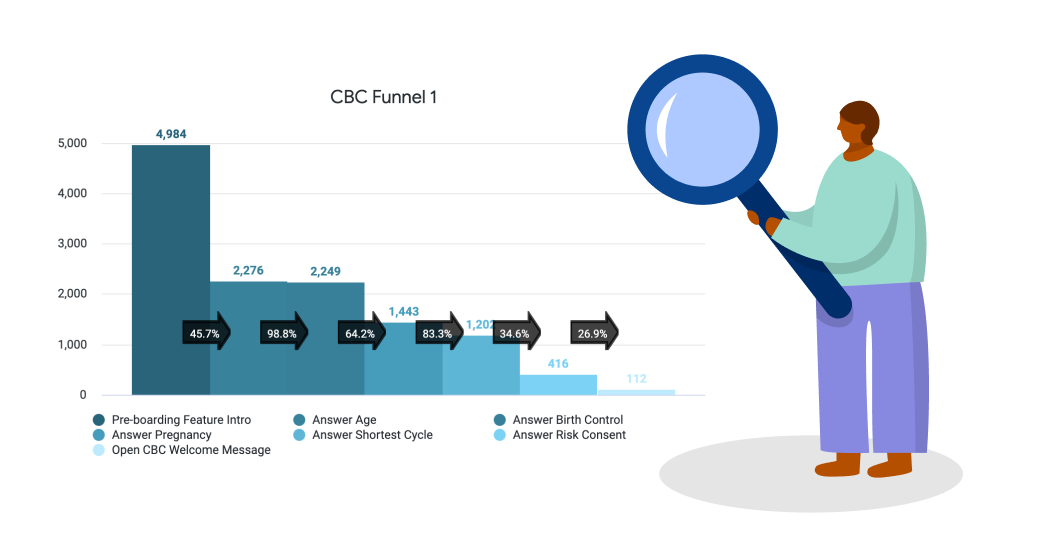
The numbers here are a snapshot from early on, showing where users drop off.
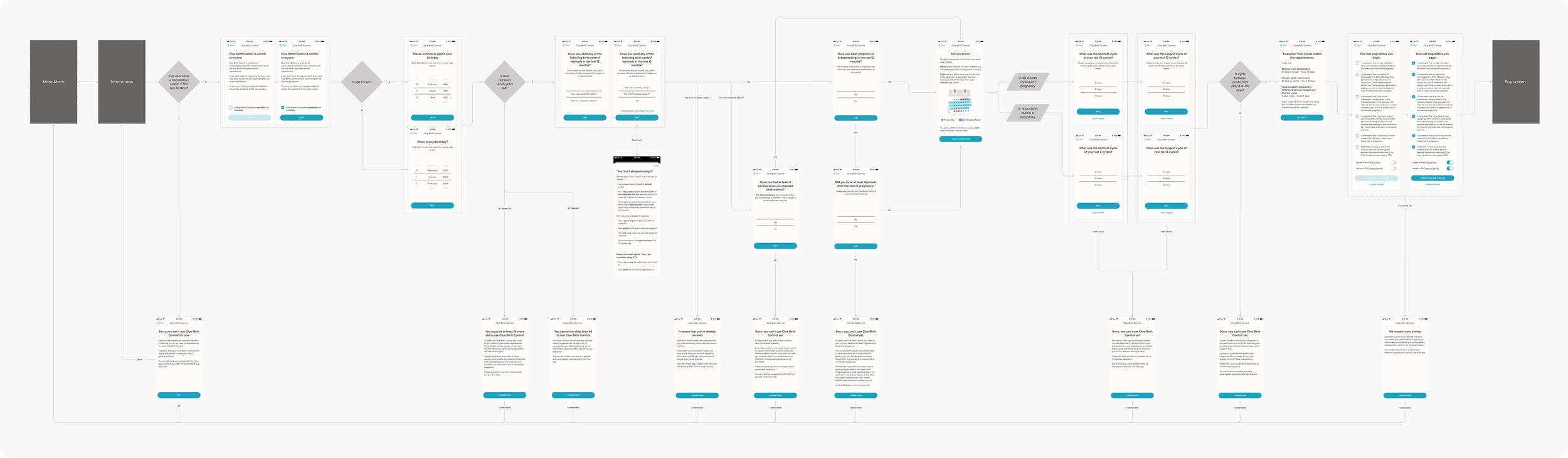
The whole flow of the questionnaire.
Ideas to improve
Me and the product manager started a project to improve the flow and hopefully increase amount of users that get through the funnel. The implemented funnel was very strict - for example, if a user tapped “I don’t know”, they would get locked out of the funnel immediately and not be able to try again in 30 days. Also if the user kept tapping “next” without changing the default values provided, they would get locked out as the values were not eligible to use the mode. These were just a couple of the issues we saw.
Myself and the PM created a list of small fixes we could do to improve in the funnel, and presented them to stakeholders in science and regulatory teams to ensure we are not sacrificing medical device quality. At the time we had very limited engineering capacity available to us, due to a staffing situation, so we opted for small ideas that could be implemented very fast with little engineering effort. Here are the top improvement ideas.
Improvement idea 1: Provide no default values - user needs to input information herself in order to continue. Hypothesis being that many users continue without changing default value and gets locked out. Possibly they don’t have their information at hand and continue with default values to see what the product is before committing. The solution of forcing users to choose values might cause more dropoff here, but less disappointment as the user is able to enter again after checking the values they need.
Improvement idea 2: In the information screen that is a part of the flow, provide more information about what the user needs to input in the coming questionnaire, so they can make sure they have the data before entering.
Improvement idea 3: Give users options to fix their input values after they filled them in before locking them out for 30 days.
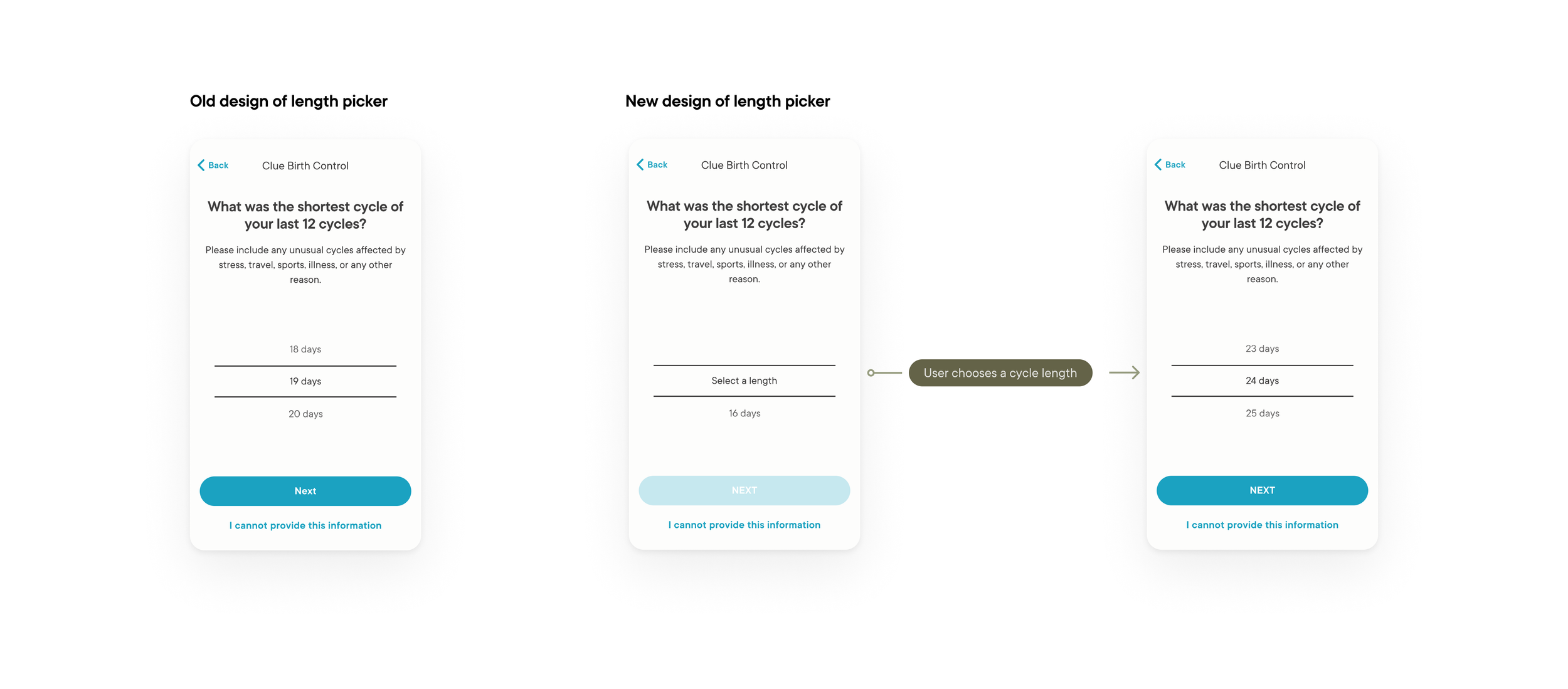
Design for the first improvement idea
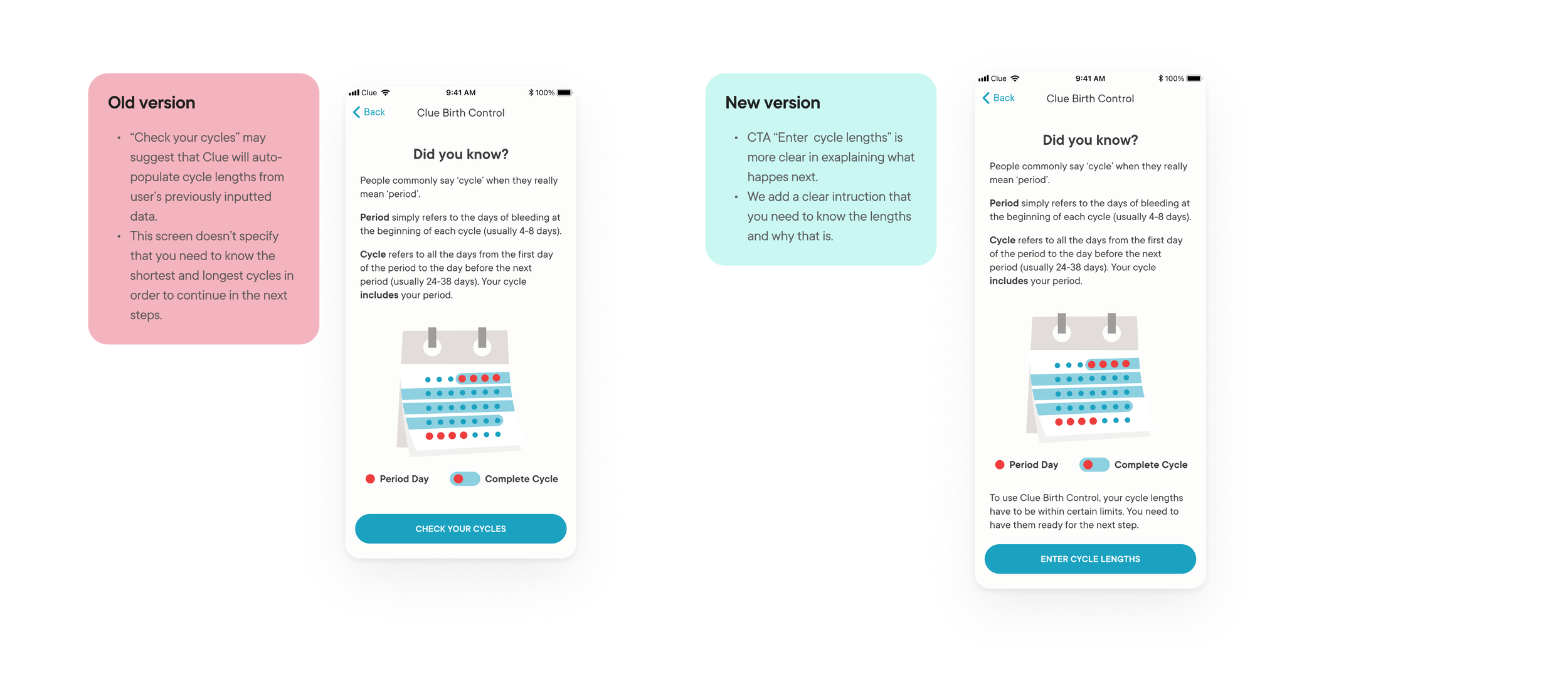
Designs for the second improvement idea
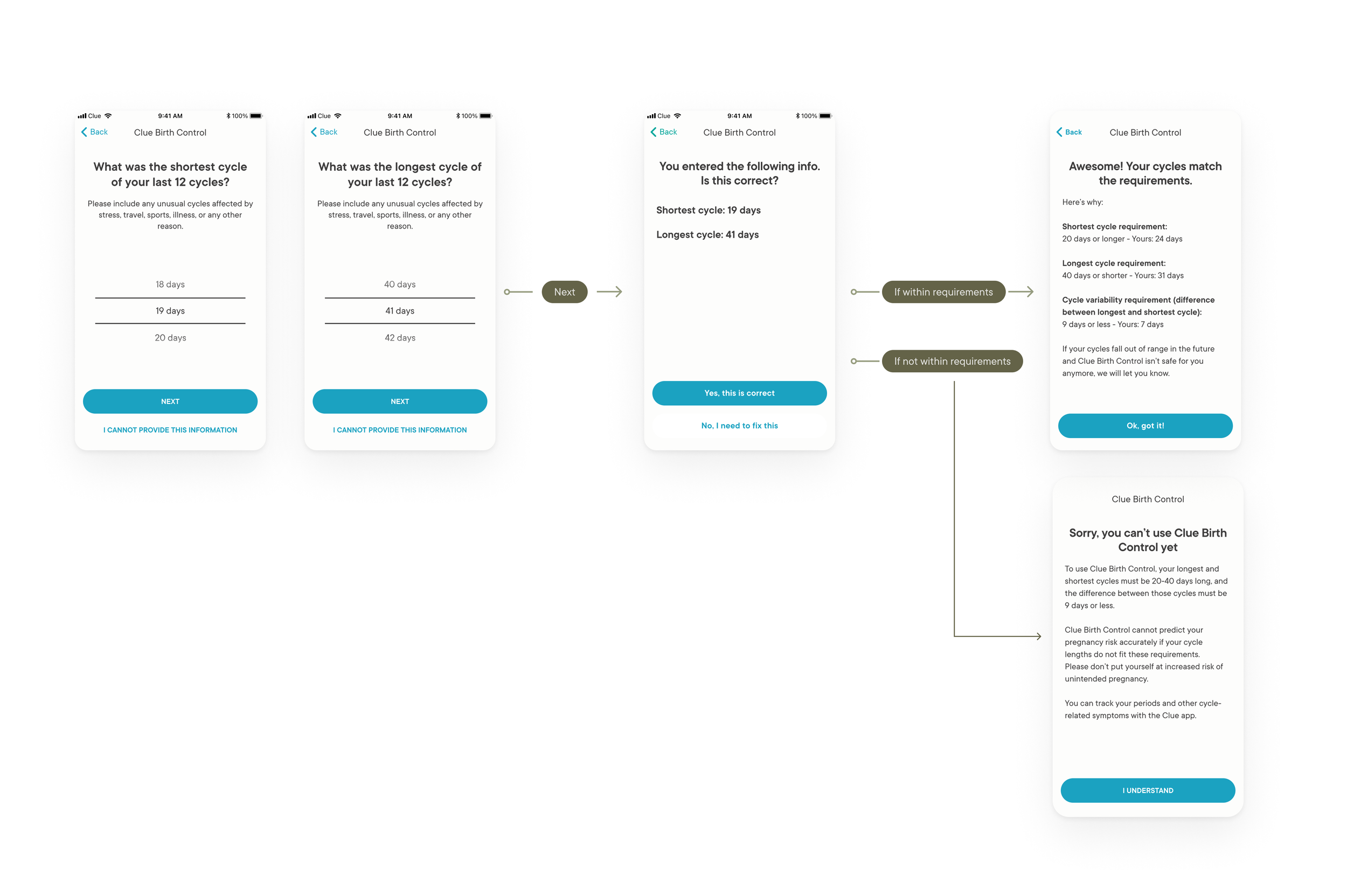
Designs for the third improvement idea
testING
As there were small improvements that we had a good hunch on, instead of spending time on a usability test, we decided to implement the 2 first ideas directly in the product and monitor performance. The third idea was unfortunately de-prioritised due to regulatory concerns - giving the option to change values was deemed risky in terms of our FDA-clearance’s strict requirements on who can access the feature.
After just a couple weeks, we saw an uptick in the numbers of users who were getting through the steps we had improved. During implementation I added all the specifications changed into the medical device file documentation as is needed in case of an FDA audit.
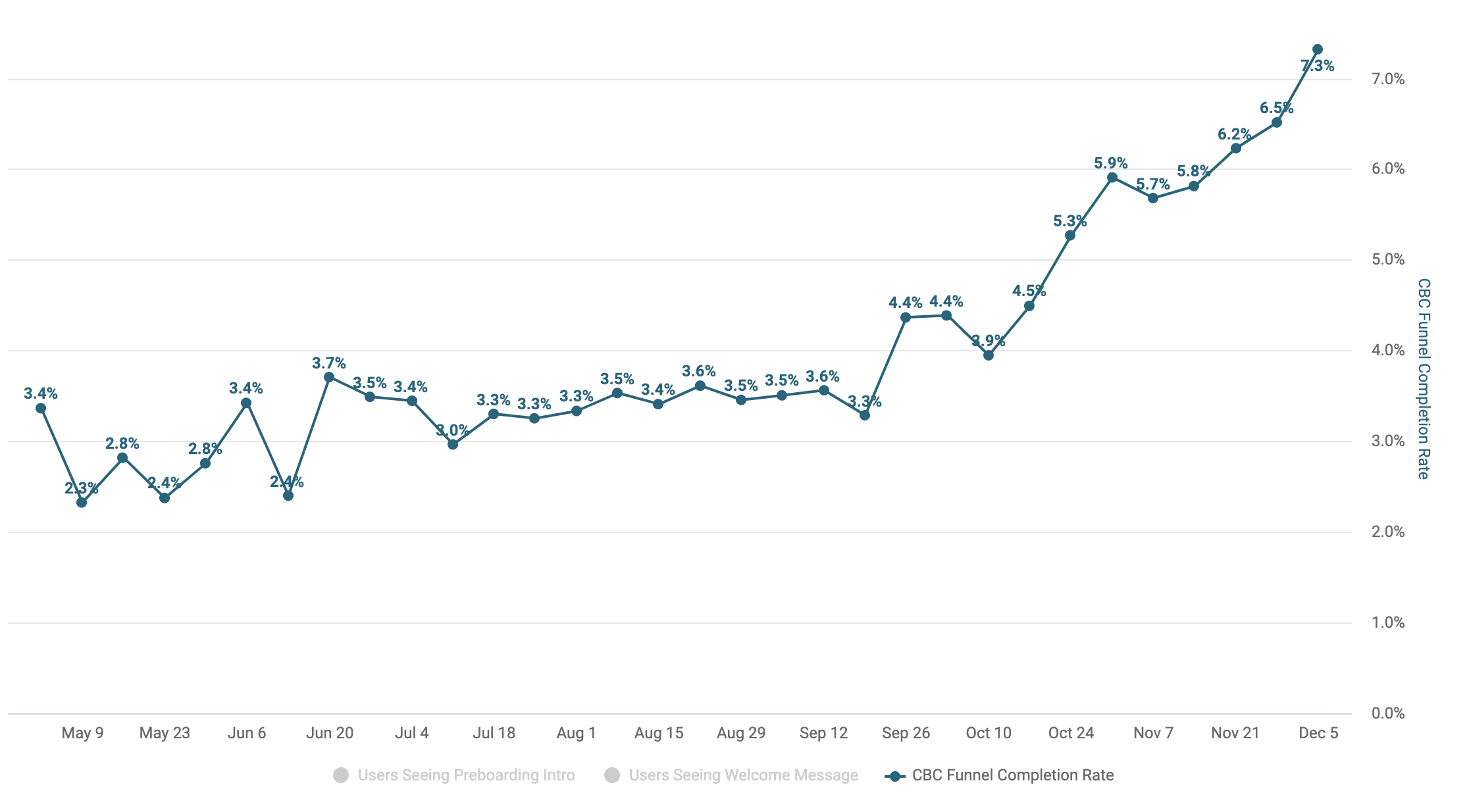
The funnel completion rate was hovering at around 3 % for a long time. With the small iterative improvements we made in this project, we doubled the completion rate.
Going forward
We kept monitoring the funnel and prepared a bigger ideation round for this project, this time with our regulatory experts present in the room. Unfortunately, before we got the chance to do that, the whole project of Clue Birth control was de-prioritised for the time being and the team’s capacity was allocated to other projects.
Quisque iaculis facilisis lacinia. Mauris euismod pellentesque tellus sit amet mollis.